
Mastering Extractions
Know when to extract — and when extraction would cost the face.
Beyond “never” or “always”: a face-first decision hierarchy for extractions, with the retraction biomechanics and anchorage control to execute the decision without flattening the profile.
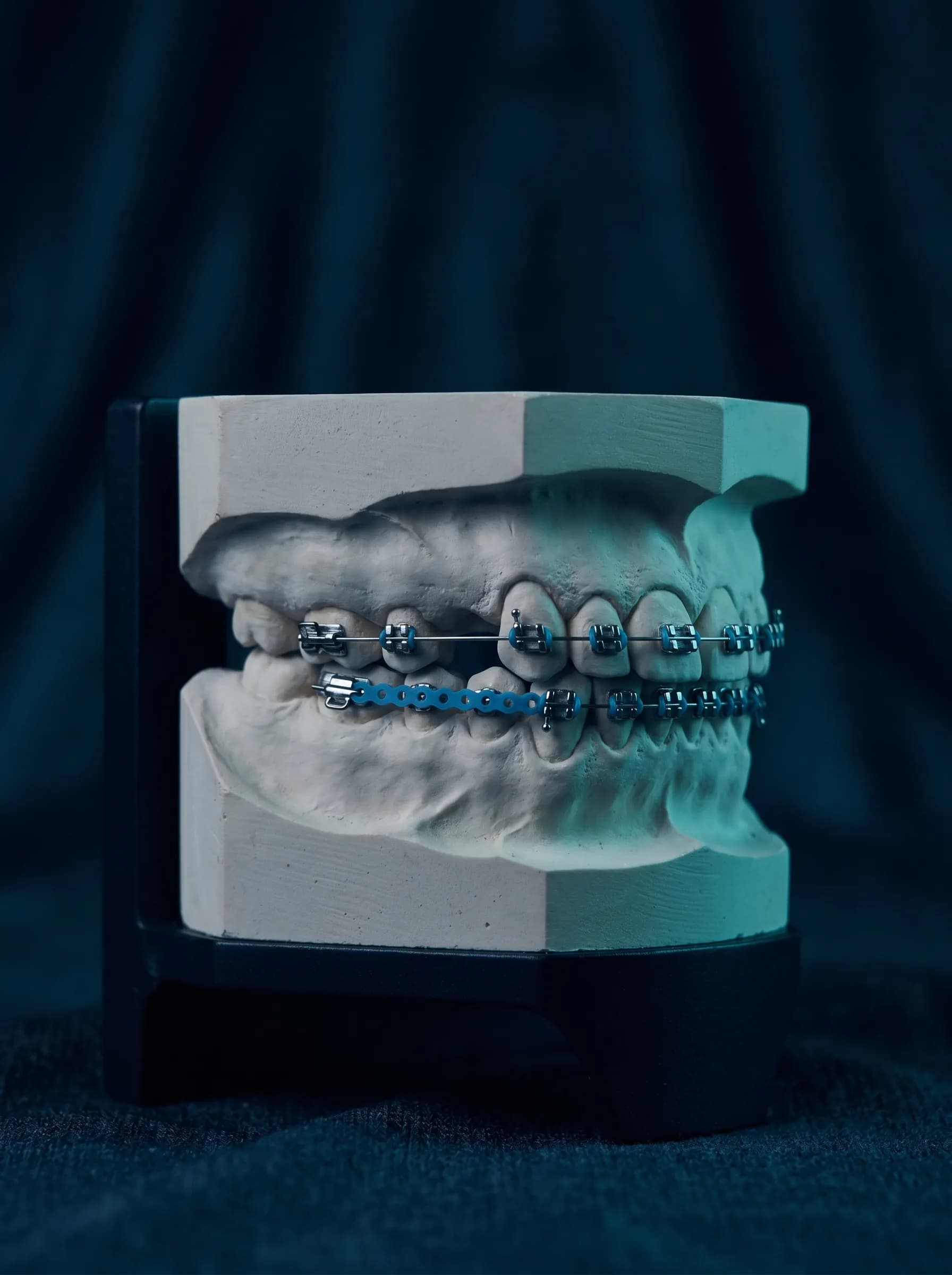
If any of this sounds familiar, this is the gap.
"I’m never sure when to extract — so I either avoid extractions when I shouldn’t, or extract and watch the profile suffer."
Rigid "never extract" and "always extract" philosophies both fail patients: one leaves severe crowding over-expanded and unstable, the other flattens faces that should never have lost a premolar.
Once the space is open, uncontrolled retraction mechanics can undo even a correct decision.
The borderline case keeps coming back — and every time, the call feels like a coin flip.
Dogma replaced by a decision hierarchy: face first, then occlusion, then cephalometrics.
The course teaches systematic facial evaluation — convexity, nasolabial angle, lip protrusion, dental exposure in profile and frontal view — as the primary guide for whether a case benefits from extraction, expansion, distalization or stripping. Then it covers the execution: the biomechanics, anchorage and sequencing that protect the decision you made.
- +Decide extraction versus expansion versus distalization versus stripping from the facial analysis — with the limits of each option, including buccal resorption from over-expansion
- +Retract with torque control, with and without extraction, so the profile improves instead of collapsing
- +Manage anchorage deliberately, including skeletal anchorage with mini-implants
- +Choose the right tooth to extract based on prognosis and mechanical goals — and sequence mechanics correctly: transverse, vertical, then sagittal
- +Recognize when orthognathic surgery is the better option, before committing the patient to camouflage
What is inside, module by module.
01The Decision Hierarchy — Face First
+
The Decision Hierarchy — Face First
When extraction is advisable, avoidable, and specifically beneficial for the patient.
- Face first (profile and frontal), then occlusion, then cephalometrics
- Systematic facial evaluation: convexity, nasolabial angle, lip protrusion, dental exposure
02Negative Tooth–Bone Discrepancy
+
Negative Tooth–Bone Discrepancy
Four ways to create space — and the limits of each.
- Extraction versus expansion versus distalization versus stripping
- Buccal resorption from over-expansion
- The role and proper application of stripping
03Retraction Biomechanics and Anchorage
+
Retraction Biomechanics and Anchorage
Executing the decision without losing control of the result.
- Biomechanics and torque control during retraction, with and without extraction
- Anchorage principles and management, including mini-implants
- Choosing the appropriate tooth for extraction based on prognosis and mechanical goals
- Sequencing mechanics: transverse, vertical, sagittal
04Extraction Strategies by Case Type
+
Extraction Strategies by Case Type
Applying the framework to the malocclusions where the extraction question keeps coming back.
- Class II strategies by magnitude and growth potential
- Class III strategies: compensation and surgical preparation
- Managing open bite with extraction mechanics
- Timing of extraction relative to retraction, lower-arch cautions and the risks of asymmetric extractions
- Recognizing when orthognathic surgery is the better option; digital setups to predict outcomes

Prof. Dr. Kleber Meireles.
Orthodontist, international speaker and creator of the KM Orthodontic Diagnosis and Treatment Planning System. Specialist in Orthodontics at USP Bauru, professor and coordinator of postgraduate orthodontics programs, co-creator of the Centrex System published in the Dental Press Journal.
His teaching is built on one premise: cases that used to take four to five years can be resolved in under two — not through talent, but through diagnosis and biomechanics applied as a method.
Built for a specific clinician.
- +Orthodontists and residents who want technically sound, patient-centered extraction decisions instead of inherited rules
- +Clinicians managing severe crowding, Class II, Class III and open bite cases where the extraction question keeps returning
- +Practitioners who have seen profiles suffer — from extracting when they shouldn’t, or from over-expanding when they should have extracted
- +Anyone who wants the facial analysis to lead the plan, not the cephalometric numbers
- −Clinicians committed to a fixed "never extract" or "always extract" philosophy
- −Anyone looking for in-depth loop and bend fabrication — that belongs to the biomechanics courses
- −Beginners who have not yet treated fixed-appliance cases
One price. Everything included.
Secure checkout via Eduzz. Card, installments and international payment supported.
- +10 lessons
- +1 year access
Before you ask.
Is the course in English?
+
Yes. All 10 lessons are in English, made for an international audience of orthodontists in 131 countries.
How long do I have access?
+
One year of full access to every lesson, on any device.
Does it tell me when NOT to extract?
+
Yes — that is half the framework. You learn when expansion, distalization or stripping solves the discrepancy with less biological cost, and where each of those options reaches its limit, including buccal resorption from over-expansion.
Does it cover the mechanics after the extraction, or only the decision?
+
Both. The decision hierarchy comes first, then the execution: retraction biomechanics with torque control, anchorage management including mini-implants, tooth selection by prognosis, and the correct sequencing of mechanics.
Is it useful for borderline crowding cases?
+
That is exactly where the framework earns its place. Borderline cases are run through the facial decision hierarchy — convexity, nasolabial angle, lip protrusion, dental exposure — so the call stops being a coin flip.
What if it does not make the extraction call clearer?
+
Run your next borderline case through the facial decision hierarchy. If it does not make the extraction call clearer, request a full refund within 15 days.
Dogma replaced by a decision hierarchy: face first, then occlusion, then cephalometrics.
A clear decision-making framework for orthodontic extractions — face first, then occlusion, then cephalometrics — plus the retraction mechanics, torque control and anchorage management to protect the result.
10 Topics on Extractions
Ten essential topics for extraction decisions you can defend — when to extract, when not to, and how to protect the facial profile when you do.
$27 →TIC · CourseTraction of Impacted Tooth
A complete 17-module protocol for predictable traction of impacted teeth: diagnosis, traction vs. extraction decisions, and the correct mechanics for buccal and palatal cases — grounded in documented clinical cases.
$497 →APB · CourseAccessible & Practical Biomechanics
The complete KM biomechanics program: force systems, bonding strategy, first- to third-order bends, sagittal corrections and finishing — plus the full bonus stack of courses and ebooks.
$1397 →