
10 Topics on Extractions
Make extraction decisions you can defend — with the patient’s face as the starting point.
Ten essential topics that turn "should I extract?" from a gut call into a decision built on criteria.
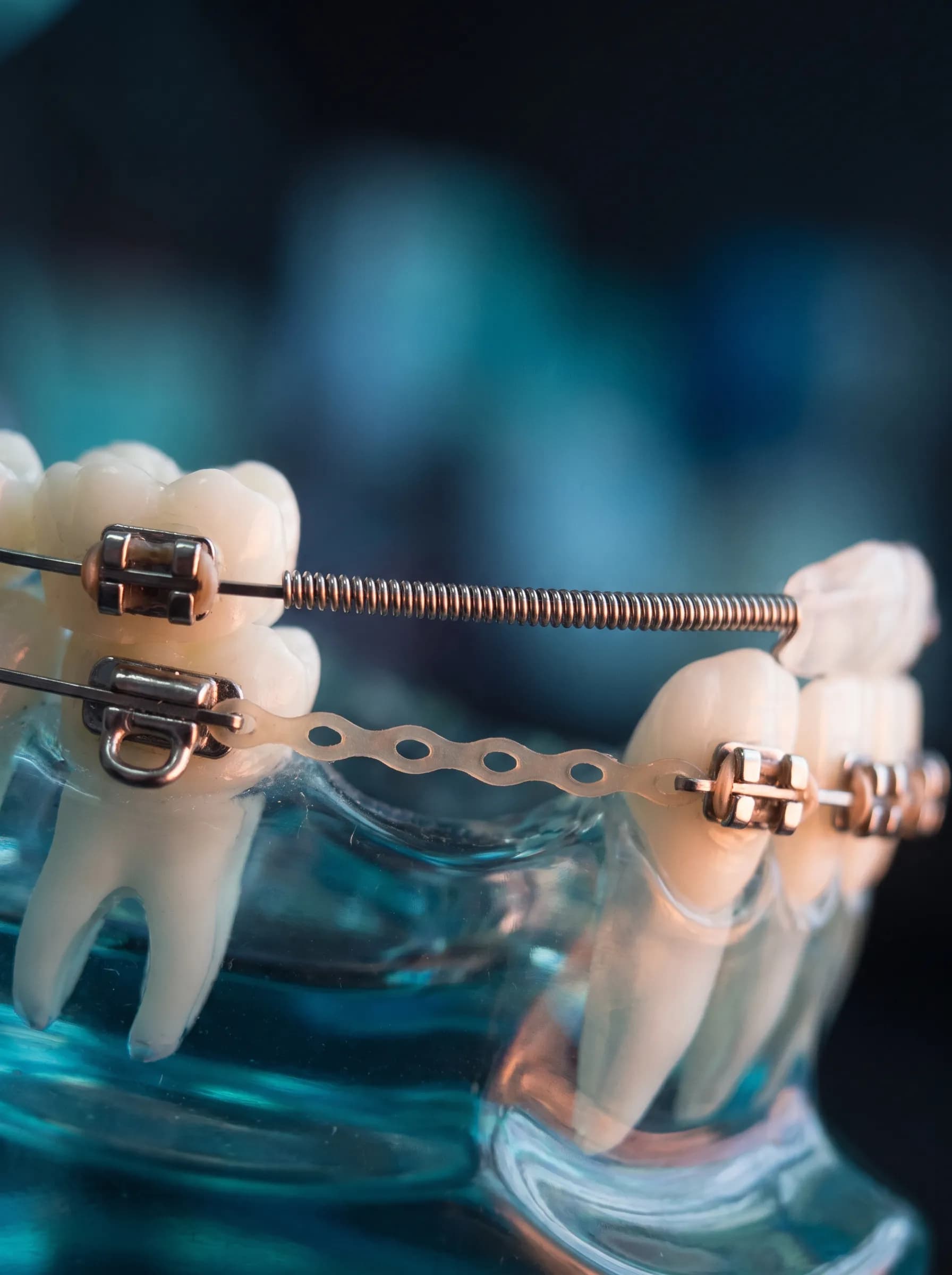
If any of this sounds familiar, this is the gap.
"Should I extract?" is the decision you second-guess the most — and the one with the least room for error.
Avoid an indicated extraction and the case fights you for years.
Extract the wrong case and you flatten a profile that cannot be given back.
You avoid extraction plans you suspect are indicated because you are unsure of the mechanics that follow.
Criteria you can defend in front of any colleague.
This ebook organizes the extraction decision into 10 essential topics — moving past rigid "never extract" or "always extract" philosophies toward criteria you can defend, with the patient’s face as the starting point of every decision.
- +Know when extraction is advisable, avoidable — or specifically beneficial to the result
- +Decide face-first: facial esthetics and profile before occlusion, occlusion before cephalometric numbers
- +Handle negative tooth-bone discrepancy with criteria instead of habit — extraction, expansion, distalization or stripping
- +Protect the profile once you commit, with anchorage planning and torque control built into the decision
Every chapter earns its place.
PDF · 15.0 MBWhy extraction philosophy fails — and criteria win
Moving past "never extract" and "always extract" toward a case-by-case decision framework.
The face as the starting point
Facial esthetics and profile before occlusion, occlusion before cephalometric numbers.
- Profiles that tolerate retraction — and profiles that cannot afford it
- When the cephalogram misleads the extraction decision
Negative tooth-bone discrepancy: the four ways out
Extraction, expansion, distalization or stripping — choosing among them with criteria instead of habit.
When extraction specifically improves the result
Cases where extracting is not a concession but the better plan.
Protecting the profile after you commit
Anchorage planning and torque control as part of the extraction decision itself — not an afterthought.
- Anchorage decisions that determine where the space goes
- Torque control during retraction

Prof. Dr. Kleber Meireles.
Orthodontist, international speaker and creator of the KM Orthodontic Diagnosis and Treatment Planning System. Specialist in Orthodontics at USP Bauru, professor and coordinator of postgraduate orthodontics programs, co-creator of the Centrex System published in the Dental Press Journal.
His teaching is built on one premise: cases that used to take four to five years can be resolved in under two — not through talent, but through diagnosis and biomechanics applied as a method.
Built for a specific clinician.
- +Orthodontists who feel insecure committing to extraction plans
- +Clinicians who avoid indicated extractions out of fear of the mechanics that follow
- +Practitioners who have seen a profile suffer from an extraction decision they would take back
- +Postgraduate dentists building a defensible extraction decision framework
- −Anyone looking for surgical extraction technique — this is about the orthodontic decision, not the procedure
- −Clinicians expecting a full video course on extraction mechanics — that is the Mastering Extractions course
One price. Everything included.
Secure checkout via Eduzz. Card, installments and international payment supported.
- +PDF · 15.0 MB
- +Immediate access · 1 year access
Before you ask.
What format is the ebook, and how do I receive it?
+
It is a PDF (15.0 MB), delivered through the KM Ortho Academy member area immediately after purchase. Read it on any device and your access stays active for one year — download it to keep it.
Is it in English?
+
Yes. The ebook is written in English for an international audience of orthodontists in 131 countries.
Is this for experienced clinicians or students?
+
Both, as long as you are already planning orthodontic cases. The 10 topics assume clinical context — they organize a decision you are already facing, rather than introducing what an extraction is.
How is this different from the Mastering Extractions course?
+
The course develops the complete protocol in video — decision, anchorage, retraction mechanics and finishing of extraction cases. This ebook condenses the decision-making criteria in written form, as the natural first step.
What if it does not help my next extraction decision?
+
If these 10 topics do not give you firmer ground for your next extraction decision, request a full refund within 15 days.
Criteria you can defend in front of any colleague.
Ten essential topics for extraction decisions you can defend — when to extract, when not to, and how to protect the facial profile when you do.
Mastering Extractions
A clear decision-making framework for orthodontic extractions — face first, then occlusion, then cephalometrics — plus the retraction mechanics, torque control and anchorage management to protect the result.
$147 →TIC · CourseTraction of Impacted Tooth
A complete 17-module protocol for predictable traction of impacted teeth: diagnosis, traction vs. extraction decisions, and the correct mechanics for buccal and palatal cases — grounded in documented clinical cases.
$497 →