
Preventive & Interceptive
Intervene at the right time — and let growth do the rest.
A diagnosis-first framework for the mixed dentition: locate the problem, act with the right device at the right moment — or deliberately wait — and avoid the extractions and surgeries that mistimed treatment creates.
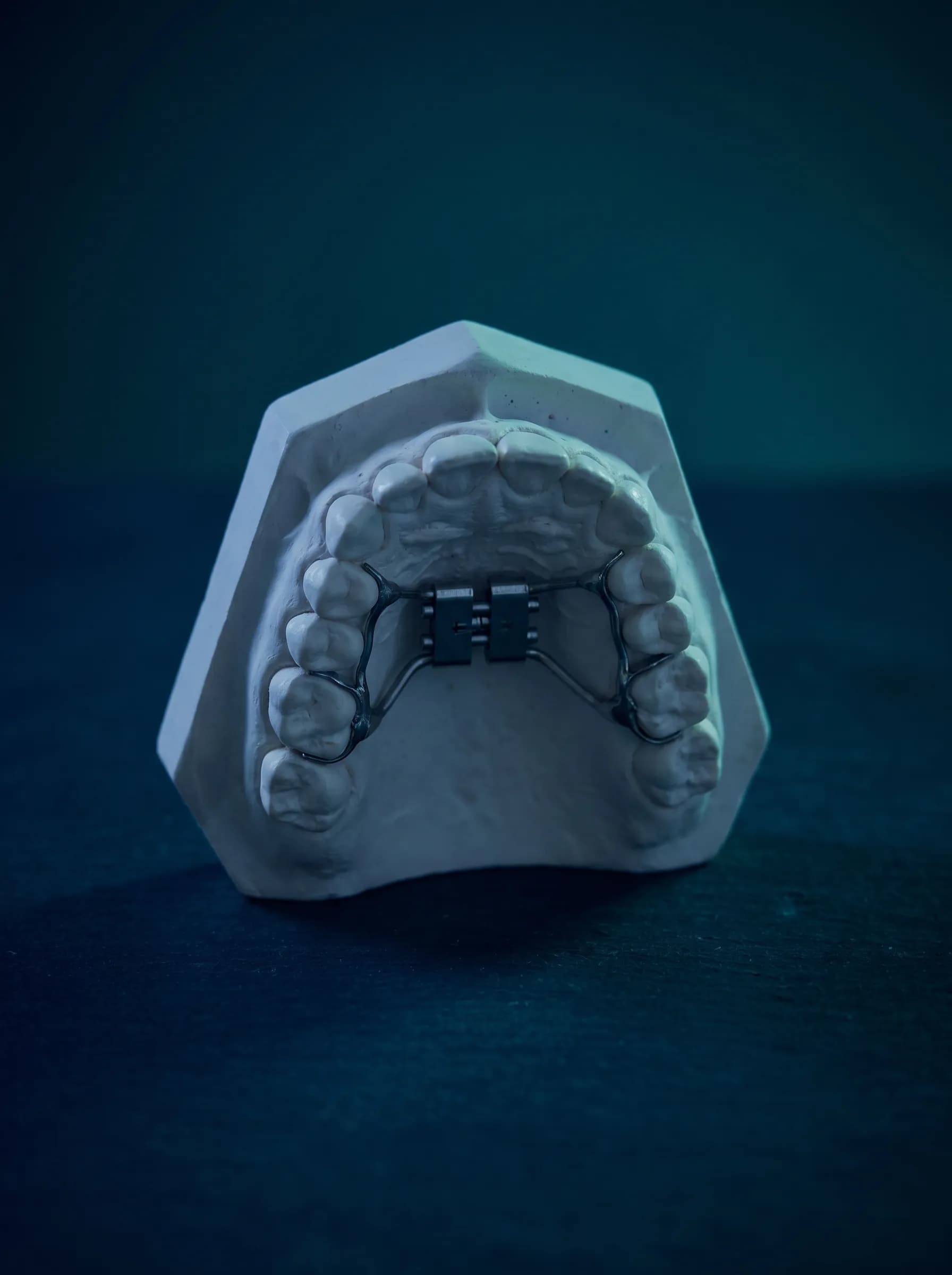
If any of this sounds familiar, this is the gap.
"I’m not confident about when and how to intervene in mixed dentition — I either do too much or too little."
An 8-year-old with crowding, a developing Class III, a transverse discrepancy — intervene now, wait, or refer? Guess wrong and a treatable problem becomes an extraction case, or a surgical one.
Intervening without a clear diagnosis commits a child to years of unnecessary appliances — and the parents to years of unnecessary appointments.
Headgear, Bionator, Herbst, Haas — taught to you as recipes, without the biomechanics that tell you which one this patient actually needs.
Locate the problem. Act at the right time. Or deliberately don’t.
The course teaches you to locate the malocclusion — maxilla or mandible, dental or skeletal, transverse, sagittal or vertical — and to act at the right time with the right device, or to deliberately not act and let growth work for you. Every appliance is taught through its biomechanics and indications, not as a recipe.
- +Decide serial extraction versus expansion in crowding cases — including the borderline case, counting on the leeway space
- +Differentiate dentoalveolar from skeletal transverse discrepancy and choose the appliance accordingly
- +Treat developing Class II in the maxilla (headgear: orthopedic versus orthodontic force, facial-type indications) or in the mandible (Bionator, Herbst, treatment timing)
- +Manage early Class III with Haas plus face mask for maxillary traction — and recognize mandibular prognathism for what it is
- +Treat the open bite habit — tongue posture, breathing, sucking — and know when to refer to speech therapy
What is inside, module by module.
01Introduction
1 lesson+
Introduction
1 lessonWelcome and introduction to preventive and interceptive orthodontics — the cost of doing too much and of doing too little.
02Module I — Space Management
4 lessons+
Module I — Space Management
4 lessonsCrowding in the mixed dentition: when to create space, when to hold it, when to wait.
- Primary, secondary and tertiary crowding
- Serial extractions
- Serial extractions combined with expansion
- The borderline case — counting on the leeway space
03Module II — Transverse Discrepancies
5 lessons+
Module II — Transverse Discrepancies
5 lessonsThe differential diagnosis that decides the appliance.
- Dentoalveolar versus skeletal expansion — three-part differential diagnosis
- Buccal corridors in the context of expansion
- Mandibular functional shift
04Module III — Secondary Crowding
1 lesson+
Module III — Secondary Crowding
1 lessonRecognizing and managing crowding that develops during the transition of the dentition.
05Module IV — Anterior Open Bite
1 lesson+
Module IV — Anterior Open Bite
1 lessonTreating the child with the habit — not just the teeth.
- Tongue posture, breathing and sucking habits
- When to refer to speech therapy
06Module V — Class II
7 lessons+
Module V — Class II
7 lessonsLocating the Class II — maxilla, mandible or vertical — and treating it where it lives.
- Two-phase versus one-phase treatment
- Facial characteristics and different approaches
- Class II treated in the maxilla: headgear biomechanics, orthopedic versus orthodontic force, brachy/mesofacial indications
- Class II treated in the mandible: Bionator and treatment timing
- The Herbst appliance protocol
07Module VI — Class III
3 lessons+
Module VI — Class III
3 lessonsEarly Class III: what responds to traction, and what is prognathism.
- Facial characteristics and component identification
- Maxillary traction with Haas plus face mask
- Mandibular prognathism — what to do

Prof. Dr. Kleber Meireles.
Orthodontist, international speaker and creator of the KM Orthodontic Diagnosis and Treatment Planning System. Specialist in Orthodontics at USP Bauru, professor and coordinator of postgraduate orthodontics programs, co-creator of the Centrex System published in the Dental Press Journal.
His teaching is built on one premise: cases that used to take four to five years can be resolved in under two — not through talent, but through diagnosis and biomechanics applied as a method.
Built for a specific clinician.
- +Orthodontists who treat children and adolescents in the mixed dentition and want a diagnosis-first framework for when to intervene
- +Clinicians who want to avoid unnecessary extractions — and prevent surgical cases — through well-timed interception
- +Practitioners unsure whether a developing Class II belongs to the maxilla, the mandible or the vertical
- +General dentists who need to recognize developing malocclusions at the right time
- −Anyone looking for a textbook course on craniofacial growth theory — the course assumes that base and goes straight to clinical decision-making
- −Clinicians who treat only adult patients
- −Anyone expecting appliance recipes without the diagnostic reasoning behind them
Try the free trial version first.
Key topics from the full curriculum, unlocked as a free trial. Free enrollment, study at your pace — then decide.
One price. Everything included.
Secure checkout via Eduzz. Card, installments and international payment supported.
- +6-module video curriculum
- +21 lessons
- +1 year access
Before you ask.
Is the course in English?
+
Yes. All lessons and materials are in English, made for an international audience of orthodontists in 131 countries.
How long do I have access?
+
One year of full access to the 6 modules and the bonus lesson, on any device.
Does it teach when NOT to intervene?
+
Yes — deliberately waiting is treated as a clinical decision, not an omission. You learn to identify the cases where growth and the leeway space will do the work, and the ones where waiting turns a treatable problem into an extraction or surgical case.
Which appliances are covered?
+
Headgear, Bionator, Herbst, Haas expander, transpalatal bar and face mask — each taught through its biomechanics and indications by facial type, not as a recipe.
I am a general dentist, not an orthodontist. Is this for me?
+
The course is built for clinicians who treat or screen growing patients. General dentists use it to recognize developing malocclusions at the right time — knowing what to treat, what to monitor and what to refer.
What if it does not make my intervention decisions clearer?
+
Apply the diagnostic framework to your next mixed-dentition patient. If it does not make your intervention decisions clearer, request a full refund within 15 days.
Locate the problem. Act at the right time. Or deliberately don’t.
A clinical deep dive into diagnosis and treatment planning during growth. Treat children faster, with less intervention and better results — avoiding unnecessary extractions and, in many cases, surgery.
Herbst Appliance Guide
A practical clinical guide to the Herbst appliance: when to indicate it for Class II correction in growing patients, what to expect clinically, and how to manage it in daily practice.
$27 →PDX · EbookPendex Appliance Guide
A practical clinical guide to the Pendex appliance: upper molar distalization without depending on patient cooperation, from case selection to chairside follow-through.
$27 →DTP · CourseKM Diagnosis & Treatment Planning
The complete four-layer diagnostic protocol. Facial, smile, occlusal and cephalometric analysis integrated into one repeatable system, from Class I to surgical cases.
$697 →