
Facial & Smile Analysis
Read the face before you touch the occlusion.
Systematic facial analysis and systematic smile analysis, performed in sequence, before any mechanical decision — because an occlusion can be corrected while the face gets worse.
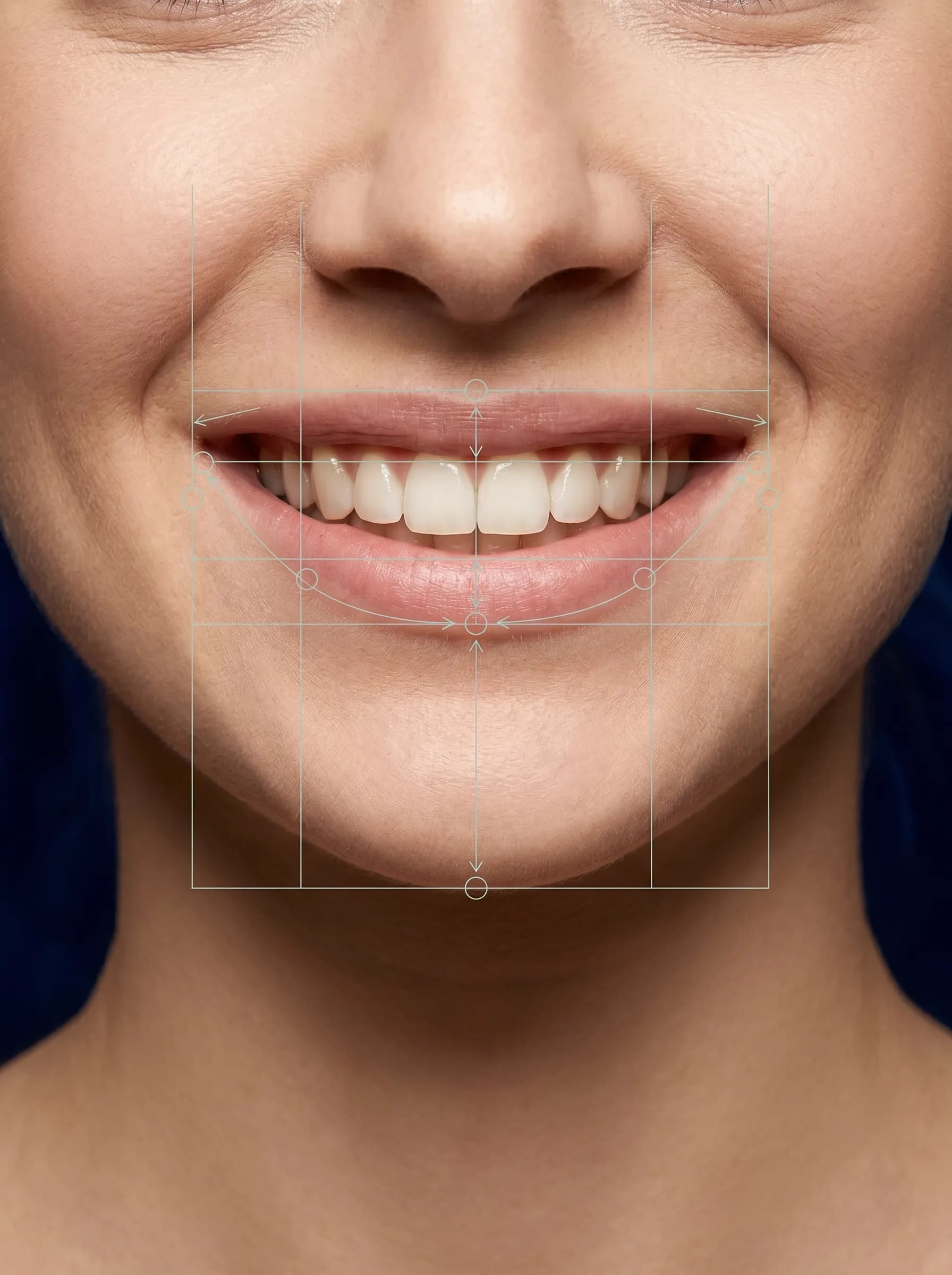
If any of this sounds familiar, this is the gap.
"I don’t have a structured protocol for facial and smile analysis — I do it by feel."
"I always feel insecure when I’m diagnosing" — because the facial exam is a glance, not a method.
You plan from the occlusion and the tracing, look at the face briefly, and hope the profile works out.
A finished case that looks worse from the front than it does on the models — and the patient notices before you do.
A facial and smile exam that becomes a protocol, not a feeling.
This course teaches the first two pillars of the KM diagnostic method as a focused, standalone program. You learn to perform a systematic facial analysis and a systematic smile analysis, in sequence, before any mechanical decision — so every plan is anchored in facial harmony from the start.
- +Perform a step-by-step facial assessment on every patient, instead of an unstructured glance
- +Evaluate the smile systematically and integrate it with the facial exam
- +Anchor diagnosis and treatment planning in the face — so the profile improves by design, not by luck
- +Catch facial red flags before bonding, when they can still change the plan
What is inside, module by module.
01Welcome to the Course
+
Welcome to the Course
How the method is organized and how to apply it case by case.
02Module I — Facial Analysis
+
Module I — Facial Analysis
The step-by-step facial assessment that anchors diagnosis and treatment planning — the patient first, the malocclusion second.
- Facial type and facial proportions
- Profile evaluation
- Lip and lower-third assessment
- How each facial finding constrains the treatment plan
03Module II — Smile Analysis
+
Module II — Smile Analysis
The systematic evaluation of the smile and its integration with the facial exam.
- Tooth display and lips-to-teeth relationship
- Gingival display and pink aesthetics
- Smile dynamics and smile arc
- Connecting smile findings to mechanical decisions

Prof. Dr. Kleber Meireles.
Orthodontist, international speaker and creator of the KM Orthodontic Diagnosis and Treatment Planning System. Specialist in Orthodontics at USP Bauru, professor and coordinator of postgraduate orthodontics programs, co-creator of the Centrex System published in the Dental Press Journal.
His teaching is built on one premise: cases that used to take four to five years can be resolved in under two — not through talent, but through diagnosis and biomechanics applied as a method.
Built for a specific clinician.
- +Orthodontists who feel insecure about diagnosis and want a structured facial and smile protocol
- +Clinicians who currently plan from the occlusion and the tracing alone
- +Readers of the free Facial Analysis ebook who want the full method behind it
- +Practitioners not yet ready to invest in the complete KM Diagnosis & Treatment Planning System
- −Clinicians looking for occlusal, cephalometric or case-type planning — that is the complete DTP System
- −Anyone expecting appliance mechanics — this course is exclusively diagnostic
- −DTP System students: Modules I and II of DTP cover this same ground
One price. Everything included.
Secure checkout via Eduzz. Card, installments and international payment supported.
- +3-module video curriculum
- +22 lessons
- +1 year access
Before you ask.
Is the course in English?
+
Yes. All 22 lessons are in English, made for an international audience of orthodontists.
How long do I have access?
+
One year of full access to all three modules, on any device.
How does it relate to the KM Diagnosis & Treatment Planning System?
+
It is a focused, standalone program covering the facial and smile pillars of the KM method. The complete DTP System adds occlusal analysis, cephalometrics and case-type planning. If you already own DTP, you already have this content.
Is it theoretical or applicable chairside?
+
Applicable. The analysis is taught as a repeatable sequence you perform on your next patient’s records — the same exam Prof. Kleber performs before any mechanical decision.
I am still in my orthodontic specialization. Is it suitable?
+
Yes. The facial and smile exam is the entry point of the KM method and assumes no prior exposure to it — only basic orthodontic records knowledge.
What if it does not change how I plan?
+
Apply the analysis protocol to your next case, and if it does not change how you plan, request a full refund within 15 days.
A facial and smile exam that becomes a protocol, not a feeling.
A focused 3-module, 22-lesson course on the first two pillars of the KM diagnostic method: structured facial and smile analysis, so diagnosis and planning start with the face — not the occlusion alone.
KM Diagnosis & Treatment Planning
The complete four-layer diagnostic protocol. Facial, smile, occlusal and cephalometric analysis integrated into one repeatable system, from Class I to surgical cases.
$697 →FCB · EbookFacial & Cephalometric Analysis
A clinical ebook on facial and cephalometric analysis — read the face systematically first, use the cephalometric measures that matter, and build diagnoses you can defend.
$97 →OS · EbookOrthodontic Solutions
A clinical ebook on treating and finishing orthodontic cases with excellence — the reasoning that connects diagnosis, mechanics and finishing into one continuous plan.
$197 →